
The Czech Republic could be Europe's superconnector. All it takes is greater ambition in the construction of high-speed rail lines
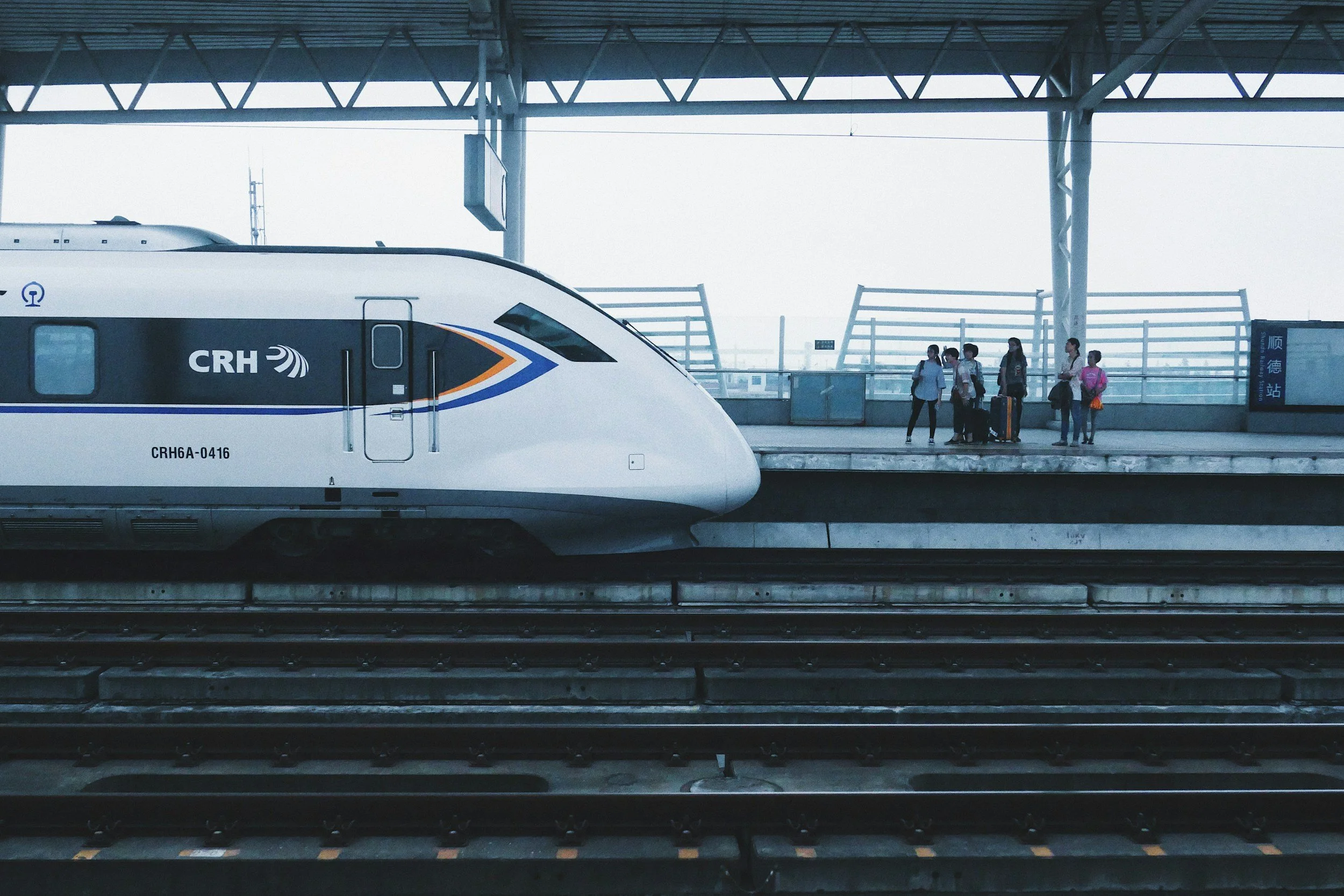
A new study shows that we can build one-third more high-speed rail lines in less time and at a lower cost
(Czech Republic / Embargoed until 8:00 a.m. on June 12, 2024) The Puls Institute has released a new study titled “Superconnector,” which outlines a proposal for Czech high-speed rail lines, estimates construction costs, and calculates the increase in mobility potential for the population in individual regions. It proposes approximately 200 km more high-speed rail lines than the Ministry of Transportation, supplemented by 300 km of conventional rail lines connecting regions. All of this at a lower cost than the Ministry of Transportation’s current plans.
“We do not want to change the Ministry of Transportation’s current plans in any way. We are expanding the scope of the project so that we can become a full-fledged European hub,” says Martin Hausenblas, one of the founders of the Puls Institute for Sustainable Infrastructure, in the study, adding , “If it’s faster today to take a train from Berlin to Vienna via the Czech Republic, then we’re essentially just a roundabout. And nothing happens there—just tulips are grown. Yet being a European crossroads is a unique competitive advantage for the Czech Republic; our location in the heart of Europe predestines us for this role. Both citizens and businesses can benefit from this.”
Superkonektor was developed in collaboration with transportation analysts, geographers, designers, and a wide range of other experts. It set several parameters as its core objectives. All major routes must be competitive with travel by car—that is, the train must be at least 10 minutes faster. “Only rail transport that is faster than car travel can lead to reduced emissions and sustainability. Sustainability, social justice, prosperity, and safety are our key values,” says Adam Ondráček, director of the Puls Institute. While in 2023, traveling by train was more advantageous for 700,000 people in the Czech Republic, according to Superkonektor, the construction of high-speed rail lines would make train travel more advantageous for up to 5.5 million Czech residents. “If the Czech Republic wants to decarbonize transportation and contribute to meeting its climate goals, we see a clear path to achieving this,” concludes Ondráček.
Other key parameters for developing the proposal included connecting all regional capitals to Prague or Brno within one hour, linking Czech international airports to high-speed rail lines, implementing an integrated, Swiss-style synchronized schedule, and completing the project by 2040. The authors of the study successfully incorporated all these parameters into the proposal and calculated both the implementation cost and the benefits in terms of increased mobility potential for individual regions.
Superkonektor thus proposes a total of 1,179 km of new rail lines, of which 851 km would be high-speed and 328 km would be conventional. The Ministry of Transportation’s current plan calls for 600–800 km of high-speed rail lines.
According to the Puls Institute’s proposal, construction costs could be lower than those outlined in the Ministry of Transportation’s current plans. The key lies in how the project and high-speed rail lines are managed: opening the market to competition, a clear long-term political commitment to build the network, standardizing railway structures using a “Lego-style” approach, or dividing construction into the railway “substructure” and “superstructure.” While any company can build embankments, drainage channels, and similar structures, the superstructure—including tracks, signaling systems, and other components—must be built by specialized firms. “In the Czech Republic, however, railways are built exclusively by specialized firms, which reduces competition and prolongs construction , ” explains Martin Hausenblas, adding, “Let’s also not forget that, in addition to inflation, the prices of construction work rise by about 5 percent every year. That’s why we investigated where construction is fastest and cheapest, and it’s clearly Spain, which also has the most extensive high-speed rail network in Europe.” Analysts thus divided the planned routes into standard construction projects and bridges and tunnels, and based on that, calculated the cost of the entire plan using Spanish prices. With a scope nearly one-third larger, this plan costs 170 billion crowns less than what the Railway Administration’s current plans estimate.
A major change from the current plans of the Railway Administration is the high-speed rail line from Plzeň to Bavaria. Currently, service to one of Europe’s wealthiest regions is provided by a single-track, non-electrified line with speed limits as low as 70 km/h in some places. The Superconnector study also includes a model developed by a team of geographers led by Associate Professor Miroslav Marada from the Department of Social Geography and Regional Development at the Faculty of Science, Charles University, which explains the benefits of the new high-speed rail lines. “Faster connections will make travel to more distant destinations more appealing to passengers, and conversely, these destinations will become more attractive to commuters,” explains Assoc. Prof. Marada. This forms the basis for a model that quantifies the potential growth in the number of interconnected residents and economic entities, expressed in terms of their GDP output.
“We see the greatest increase in potential economic ties precisely in the connection between Plzeň and Bavaria. It is significantly greater than, for example, the impact of the construction of the high-speed rail line from Prague to Dresden. Similarly, we see significant potential for connecting residents along the axis between the Hradec Králové and Liberec regions and the Polish border area,” continues Assoc. Prof. Marada, and his colleague Dr. Michal Kowalski adds: “The number of potential connected residents and economic entities in the Czech Republic will increase by an average of 115% compared to current levels. Thanks to the construction of high-speed rail lines, Czech regions can achieve a level of accessibility comparable to that of regions in Germany or Belgium, for example.”
You can find the complete Superkonektor study on the website www.pulse.institute and individual images are available for download in this folder. The respondents quoted are available for interviews or on-air appearances.
Contact person:
Adam Ondráček
Director, Puls Institute
Phone: +420 732 957 387
Email: adam@pulse.institute
Superkonektor was presented at a roundtable discussion on March 28, 2024, to government officials, political representatives, and experts.


