
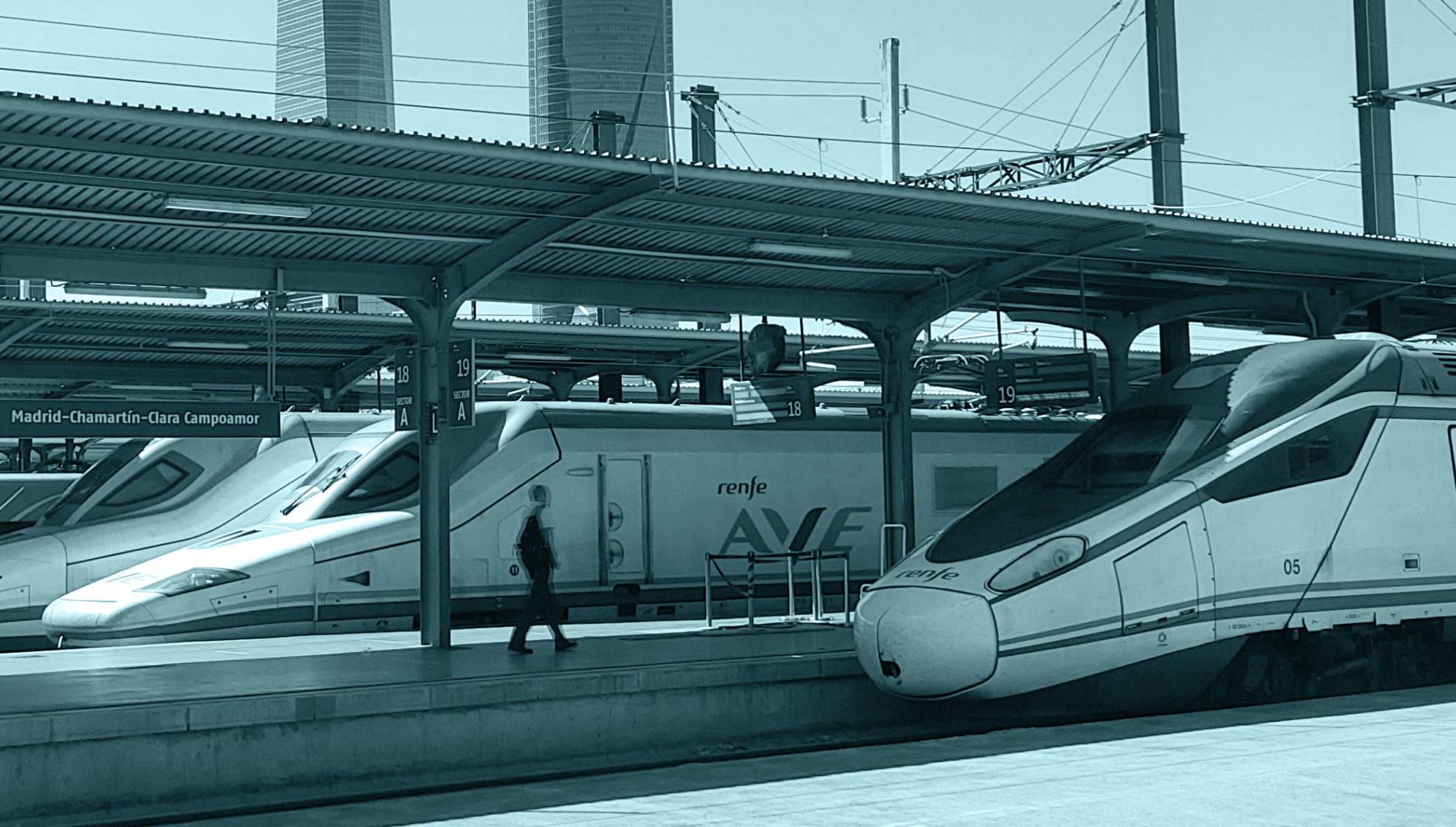
Superconnector: Proposal for Czech High-Speed Rail Lines—Revised Version as of July 2026
The Puls Institute, founded by Petr Kalaš, Adam Ondráček, and Martin Hausenblas, advocates a vision of prosperity for the Czech Republic based on its central location in Europe; in particular, it strives to establish the Czech Republic as a transportation, energy, and data hub.
Current plans for high-speed rail lines in the Czech Republic do not connect all regions and propose a single high-speed connection to Germany via Dresden. In our view, such a design does not fully utilize the potential of connecting to the economically strong regions of Bavaria and does not create a “crossroads of Europe.”
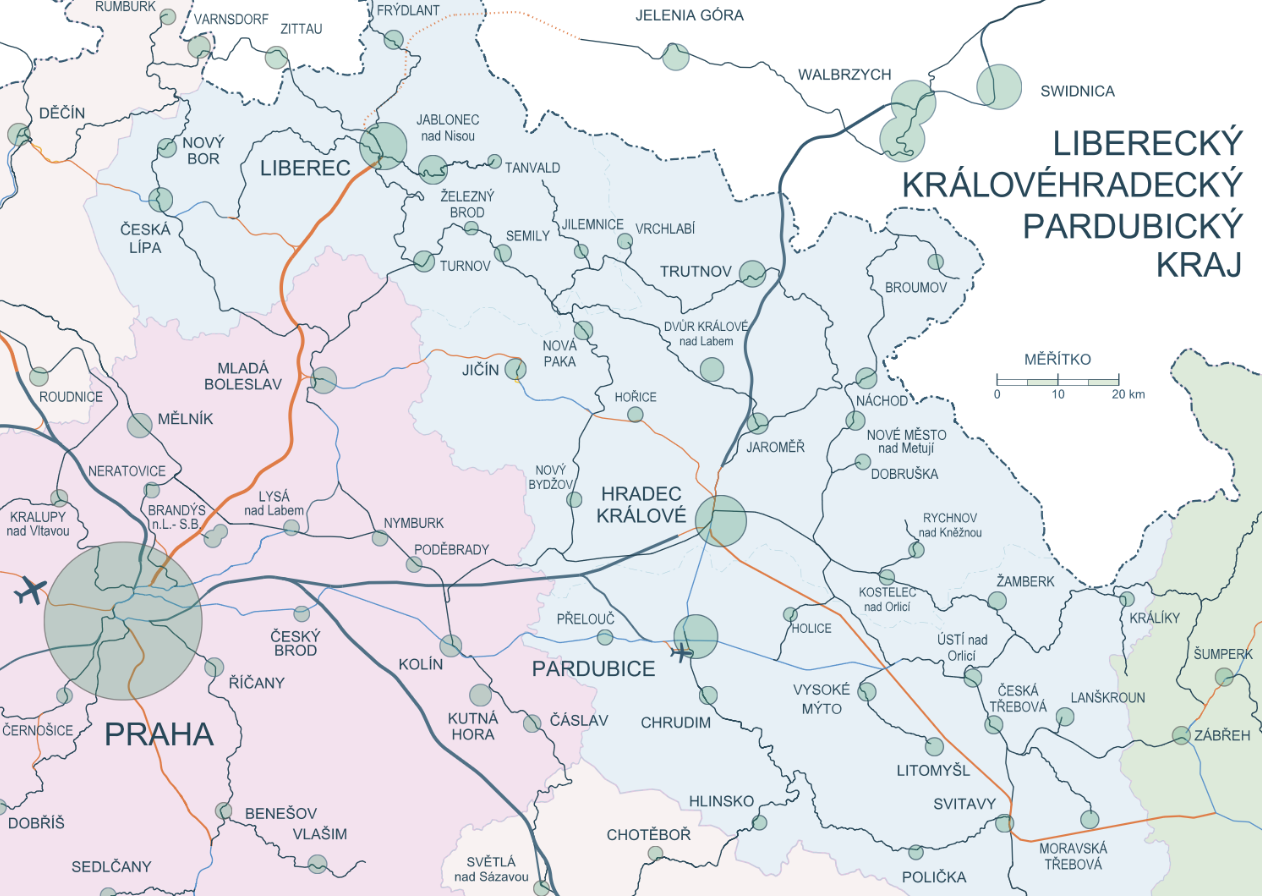
The Liberec Region Can Stop Being on the Periphery: The Puls Institute Proposes a Prague–Liberec High-Speed Rail Line, a Northern Highway Corridor, and Multilingual Education
The Liberec Region is falling behind the rest of the Czech Republic in terms of prosperity (GDP per capita is approximately 72% of the national average) and is held back by its transportation isolation and linguistic peripherality. A policy brief by the Puls Institute proposes a high-speed rail line between Prague and Liberec (approx. 35 min), a four-lane I/13 highway, and widespread multilingual education. Download the study.

Strategic Renewal of V4 Cooperation: Energy Interconnectivity, Security of Supply, and Price Stability as Shared Priorities
At the beginning of 2026, the Visegrád Four (V4) countries are led by ideologically diverse governments. These cabinets differ in their political orientations. While Prime Ministers Fico and Orbán advocate a sovereign, nationalist, and conservative course and criticize the complete severing of ties with Russian energy sources, Poland, under the leadership of Donald Tusk, emphasizes a pro-Western orientation with the aim of limiting Russian influence in the region. Despite these differences, however, all V4 countries are united by the urgent need to address common challenges in the energy sector, which thus becomes a point of convergence for their interests. The risk of widespread blackouts, persistently high energy prices, and the need to strengthen cross-border energy grid interconnections to ensure security of supply represent challenges that the region faces collectively and that are most effectively addressed through coordinated action. Although these areas represent primarily a technical necessity, they are also the most realistic and least politicized arena for effective regional coordination in the coming years.

New Lines of Defense: How Interconnected Systems Keep the Lights On
Interconnectors—the transmission lines linking power systems—have helped Europe cope with power outages and attacks, thereby becoming a key element of security. This report analyzes events in electrical grids and highlights the role of interconnectors in preventing and managing blackouts. It also presents arguments for accelerating construction in regions with insufficient cross-border capacity. Furthermore, it describes the importance of interconnectors in times of geopolitical instability and war, using examples from Ukraine, Moldova, and the Baltic states. It includes recommendations for both the development of new interconnection capacity and the securing of existing infrastructure.

The EU’s Multiannual Financial Framework for 2028–2034: Impacts on the Institutional Capacity of the Czech Republic
The European Union is entering the new 2028–2034 programming period with a simplified financial architecture that integrates previously separate funds into a single partnership plan for each member state. This approach is intended to ensure greater alignment between economic, climate, and social objectives and to shift the focus from the disbursement of funds to the achievement of results.
For the Czech Republic, this means the need to clearly define national investment priorities, ensure their institutional coordination, and create a unified mechanism for managing strategic projects. The new government thus has a unique opportunity to establish a system that integrates European and national resources into a single investment framework, promotes predictability, and increases the overall efficiency of public spending. In the Czech context, this transition comes at a time when the new government will face growing budgetary pressures and a shortage of available resources in many ministries.

Prague Airport Express
In its standard mode of operation, the Airport Express will run between Prague’s Main Station and the airport with a single stop at Můstek. The target travel time is nine minutes. To maintain a 15-minute headway, two train sets will be required, which will turn around at the airport on Track 52; the estimated entry speed is 80 km/h and the departure speed is 60 km/h.
For select airlines, the possibility of checking baggage at the Main Train Station is being considered, which will shorten and simplify the journey for passengers. The infrastructure’s capacity is designed to allow for the addition of up to eight more trains per hour to the schedule, which could arrive from the direction of Zahradní Město—for example, routes from České Budějovice, Brno, or Hradec Králové.
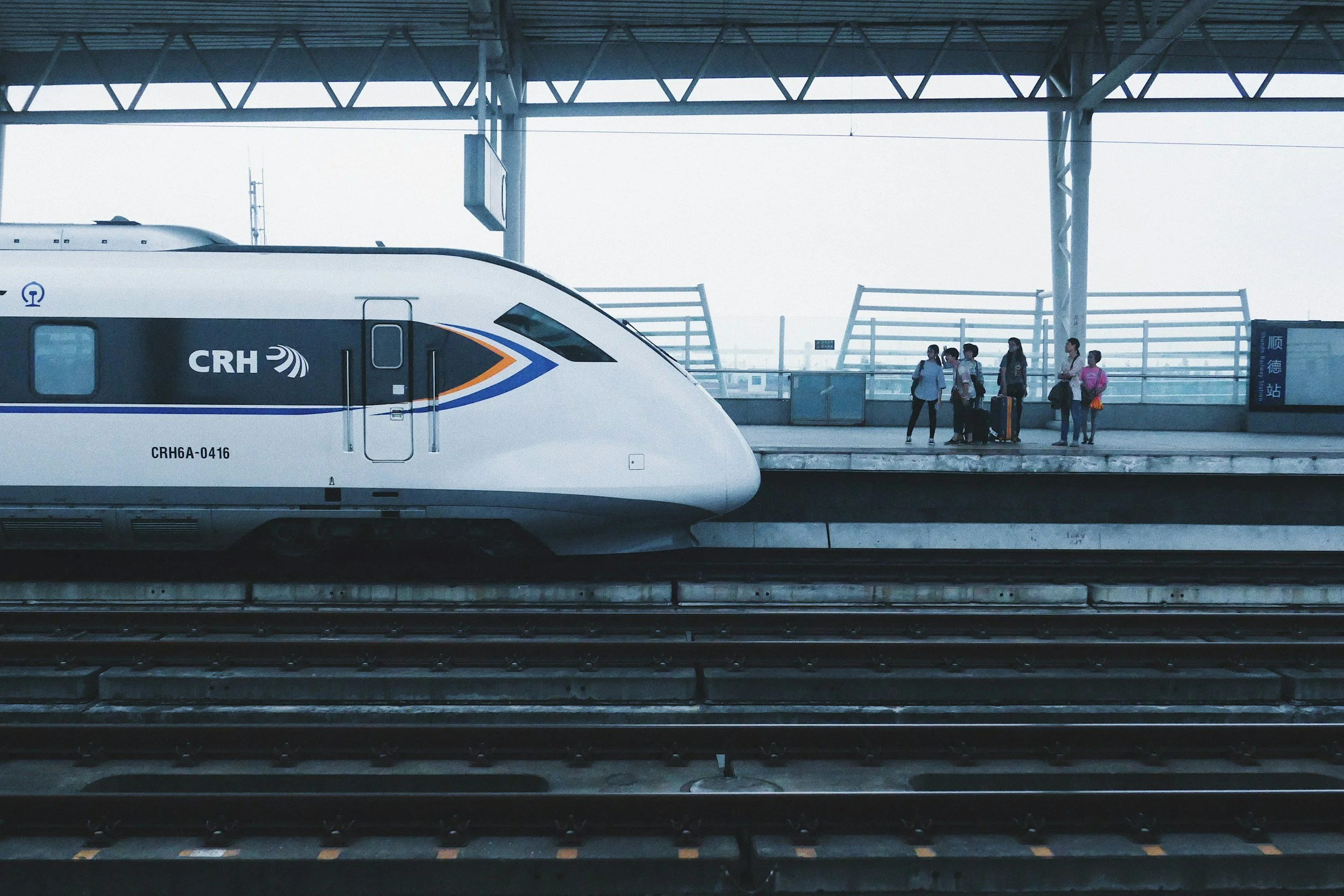
Superconnector: How Can the Czech Republic Become a European Transportation Hub?
Superkonektor is further developing the Ministry of Transport and the Railway Administration’s proposal for high-speed rail lines to meet a set of expanded requirements, including connecting all regional capitals to Prague and Brno via high-speed rail within one hour. The goal is for this connection to be competitive with travel by car while also linking all major cross-border transportation routes. The initial infrastructure design already takes into account the infrastructure requirements necessary for regular-interval service and ensures direct connections to airports to facilitate synergy between rail and air transport. It is essential to rapidly complete the construction of the entire network by 2035, given the potential for significant savings resulting from the project’s scale and as a countermeasure to mitigate the impact of rising construction costs.

Central Europe could have energy that is one-third cheaper. All it takes is strengthening cross-border energy connections
In early October, the Puls Institute published two EMBER studies in Czech that present a visionary outlook on the energy future of Central and Eastern Europe (CEE). The detailed analyses highlight the region’s potential in wind and solar energy and suggest how these countries could achieve energy self-sufficiency and security if they adopted ambitious decarbonization strategies. A key element is strengthening cross-border energy connections and doubling interconnection capacity in Europe over the next ten to fifteen years. The studies then offer a path for CEE countries to optimize the use of renewable energy sources, achieve climate neutrality, and simultaneously reap economic benefits from the entire process.
A Joint Path Toward Cleaner and More Affordable Energy in Central and Eastern Europe
By accelerating the deployment of wind and solar energy, the Central and Eastern European region could reduce average wholesale electricity prices by 29% compared to current policy targets. The region could also become fully self-sufficient in electricity generation and export 23.1 TWh of electricity in 2030, compared to imports of 7.3 TWh in 2022. If the region does not participate in Europe’s energy transition, it will lose its economic competitiveness and become dependent on electricity imports.

Lift the Barriers: The Path to Affordable and Clean Electricity Lies in Opening the Borders
The European power system is the world’s largest interconnected grid, with more than 400 interconnectors linking nearly 600 million people. It is operated, developed, and planned by European transmission system operators (TSOs). ENTSO-E (the European Network of Transmission System Operators for Electricity) brings together 39 European transmission system operators who coordinate the operation and development of the interconnected power system.